Cool Rules For Adding And Multiplying Matrices References
Cool Rules For Adding And Multiplying Matrices References. The process of multiplying ab. The “formulas” to add and subtract matrices are shown below.
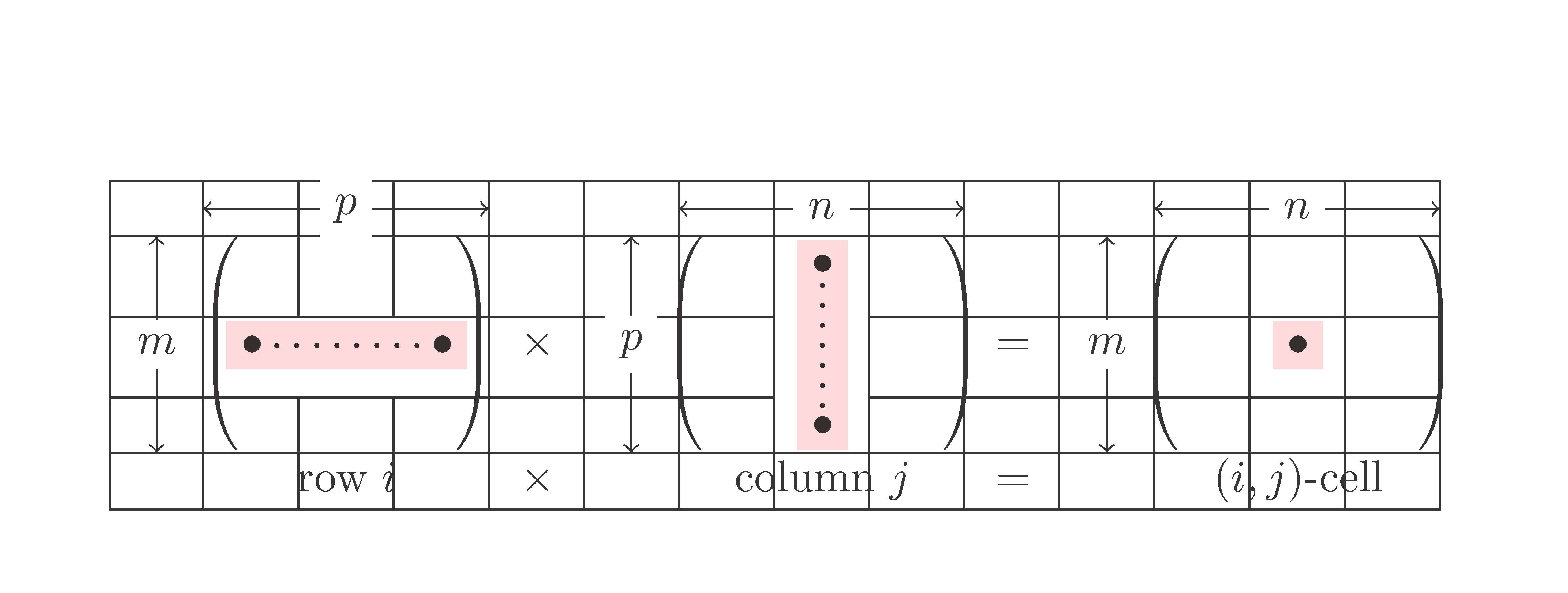
The most important rule to know is that when adding two or more matrices, first make sure the matrices have the same dimensions. Solution a) the matrices in part a) have the same order and we therefore can add them by adding their corresponding. When multiplying one matrix by another, the rows and columns must be treated as vectors.
Scalar By A Matrix By Multiplying Every Entry Of The Matrix By The Scalar This Is Denoted By Juxtaposition Or With The Scalar On The Left.
Solution a) the matrices in part a) have the same order and we therefore can add them by adding their corresponding. Now you can proceed to take the dot product of every row of the first matrix with every column of the second. [5678] focus on the following rows and columns.
The Most Important Rule To Know Is That When Adding Two Or More Matrices First Make Sure The Matrices Have The Same Dimensions.
Multiplying matrices once we’ve checked the number of columns of the first matrix is the same as the number of rows in the second matrix, we can now multiply them together, however, this is where it gets tricky. Make sure that the number of columns in the 1 st matrix equals the number of rows in the 2 nd matrix (compatibility of matrices). We start by computing the addition on the left hand side of the equation:
A) \Quad In Our First Case We Will Verify The Commutative Property Of An Addition Of Matrices By Computing The Equation A + B = B + A A+B =B+A.
Also, it is essential to note that the two matrices have to be of the same. So the rules of adding and subtracting matrices are simple: The rules of multiplication of matrices are as follows:
The Most Important Rule To Multiply Two Matrices Is That The Number Of Rows In The First Matrix Is Equal To The Number Of Columns In Another Matrix.
Where r 1 is the first row, r 2 is the second row, and c 1, c. Example 1 rewrite, if possible, the following pairs of matrices as a single matrix. Suppose, a is a matrix of order m×n and b is a matrix of order p×q.
The Process Of Multiplying Ab.
The “formulas” to add and subtract matrices are shown below. Ok, so how do we multiply two matrices? If they are not the same size (if they do not have the same dimensions), then the addition is not defined (doesn't make mathematical sense).